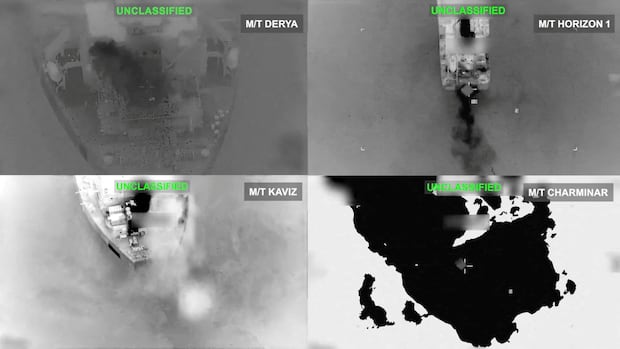
The U.S. military reported the destruction of five Iranian oil tankers on Tuesday following recent attacks on its warships. In retaliation, Iran launched missiles at U.S. targets in Jordan, with Jordan’s military intercepting 18 ballistic missiles while two others landed in uninhabited areas. No casualties were reported. Jordan, a key U.S. ally hosting American forces, has been a repeated target of Iranian attacks.
President Donald Trump’s administration imposed new sanctions on elements of Iran’s aviation sector, including commercial airlines and cargo service providers, to further isolate Tehran economically. Both the U.S. and Iran are vying for control over the vital Strait of Hormuz, a critical waterway for global oil transportation.
Over the weekend, U.S. forces destroyed three Iranian oil tankers in response to attempted missile attacks by Iran’s Islamic Revolutionary Guard Corps on American naval vessels. Secretary of State Marco Rubio emphasized that the U.S. will not tolerate such actions.
Experts warn that the ongoing tit-for-tat strikes between the U.S. and Iran could lead to further escalation and impact the global economy negatively. The situation in the region remains tense, with both sides engaging in military actions amid rising tension and economic pressures.
Iran’s IRGC navy issued warnings to oil tanker crews near Kuwait and Bahrain ports to evacuate, citing potential retaliation for U.S. attacks on Iranian vessels. The conflict has led to disruptions in oil exports and shipping routes in the region, affecting both countries’ economies.
The Strait of Hormuz, previously an international waterway, has become a focal point in the conflict, with Iran seeking to assert control over shipping lanes. As tensions persist, the risk of escalation and broader consequences for the region and global economy loom large.