A western honey bee’s stinger is a last-resort weapon designed to embed itself in flesh and deliver venom, often causing the bee’s death. New research published in the Proceedings of the National Academy of Sciences is shedding light on the effectiveness of this defense mechanism.
Lead author Fiorella Ramirez Esquivel, a postdoctoral researcher at Macquarie University in Australia, highlighted the significance of being able to film the bees in action using modern cameras. High-speed cameras capturing hundreds of frames per second were essential to observe the rapid bee stings.
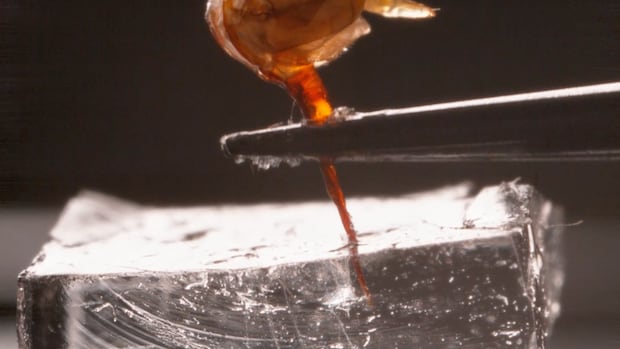
Experiments involved live honey bees, with researchers swiftly removing their stingers post-sting as the stinger remains active for only about two minutes after separation from the bee’s body. Ramirez Esquivel explained the meticulous process of inserting the stinger into an artificial skin substitute with precision due to the limited space available.
The study revealed a double-piston design in the bee’s stinger where specialized valves drive the stinger deeper while continuously pumping venom into the flesh. The intricate movement of these valves was recreated through 3D printing to understand the continuous flow of venom and the stinger’s penetration mechanism.
Juliana Rangel, an apiculture professor at Texas A&M University, praised the study for providing insights beyond traditional microscopic images. The research highlighted how honey bee stingers release pheromones to recruit other bees during an attack, showcasing the collaborative defense strategy within the hive.
The study emphasized the evolutionary importance of the honey bee’s stinging mechanism as a sacrifice for the greater good of the colony’s defense. Unlike other bee species, the western honey bee’s barbed stinger aids in remaining embedded in the target, enhancing its defensive capabilities.
The research, showcasing the complexity of bee stingers, has potential implications beyond understanding bee behavior, including possible medical applications. Lauren Ponisio, an ecologist at the University of Oregon, pondered the absence of stingers in other honey-producing bees, raising intriguing questions about the evolutionary adaptations in various bee species.
The study’s detailed findings through high-speed videography offer new perspectives on the intricate mechanics of bee stingers, providing valuable insights into their behavior and potential applications in various fields.